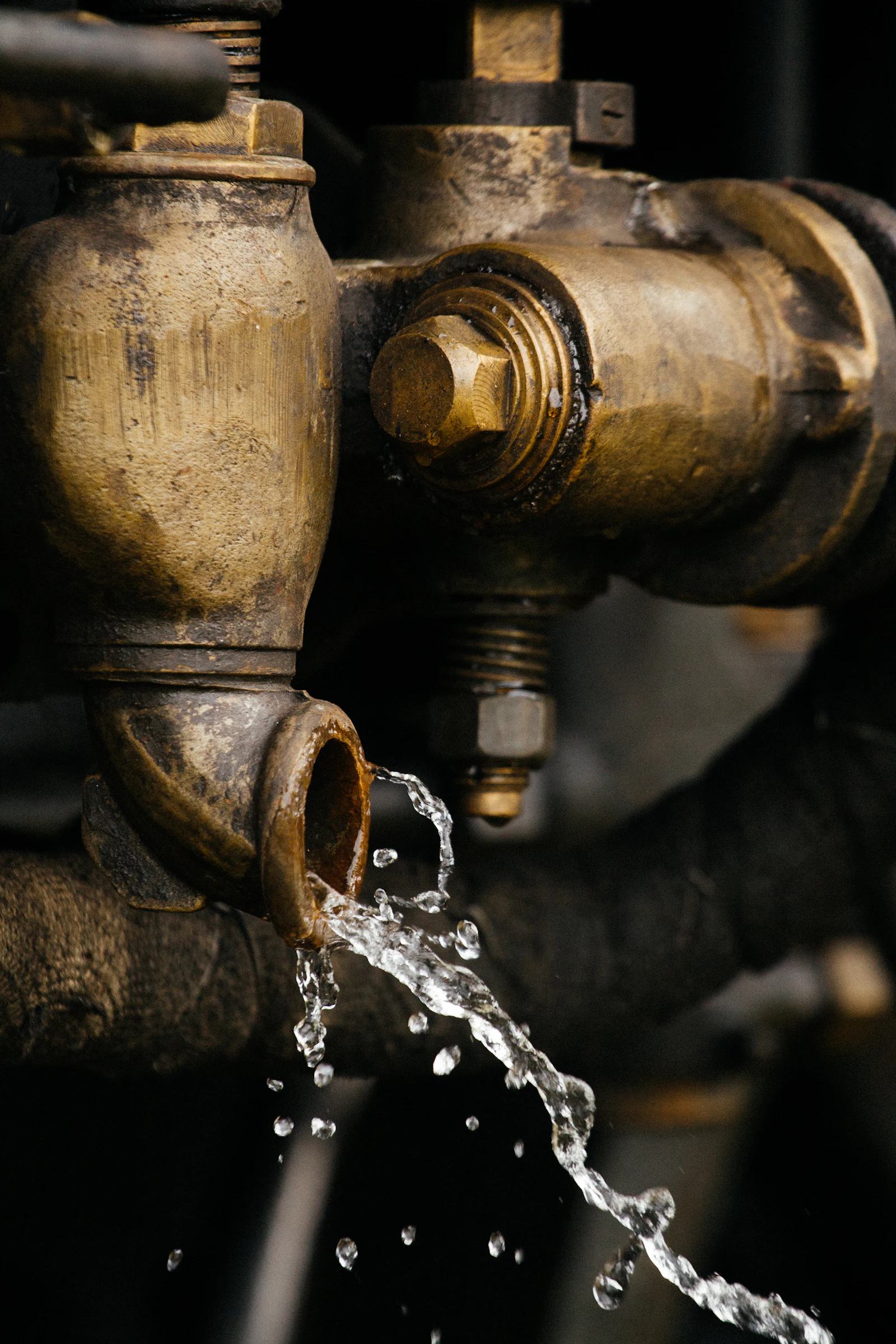
Common types of leak
- Dripping taps / faucets: usually a worn washer, cartridge or O-ring.
- Running toilets: often a worn flapper or fill valve, or a faulty flush valve seal.
- Leaking joints: under sinks, at appliance connections, or on radiator valves (UK).
- Hidden leaks: stains on ceilings or walls, damp patches, mould or a water meter that moves when everything is off.
- Burst pipes: often caused by freezing, corrosion or physical damage.
Quick checks you can do
Turn off every tap and water-using appliance and look at your water meter. If it keeps moving, water is escaping somewhere. A few drops of food colouring in a toilet cistern (tank) that appear in the bowl without flushing point to a leaking flush seal.
Preventing frozen pipes
- Insulate (lag) pipes in lofts, garages, basements and crawl spaces.
- Keep the heating on low when you're away in cold weather.
- Know where your stopcock or main shutoff valve is.
- Never thaw a frozen pipe with a naked flame. Use gentle heat such as a hot water bottle or hair dryer, and call a plumber if you're unsure.
When to call a plumber
Call a plumber for burst pipes, leaks you can't see or reach, leaks near electrics, anything involving gas appliances, and repeated leaks at the same place. Your plan in the plumber finder lists who to check for your area.
Last updated: 14 October 2026


