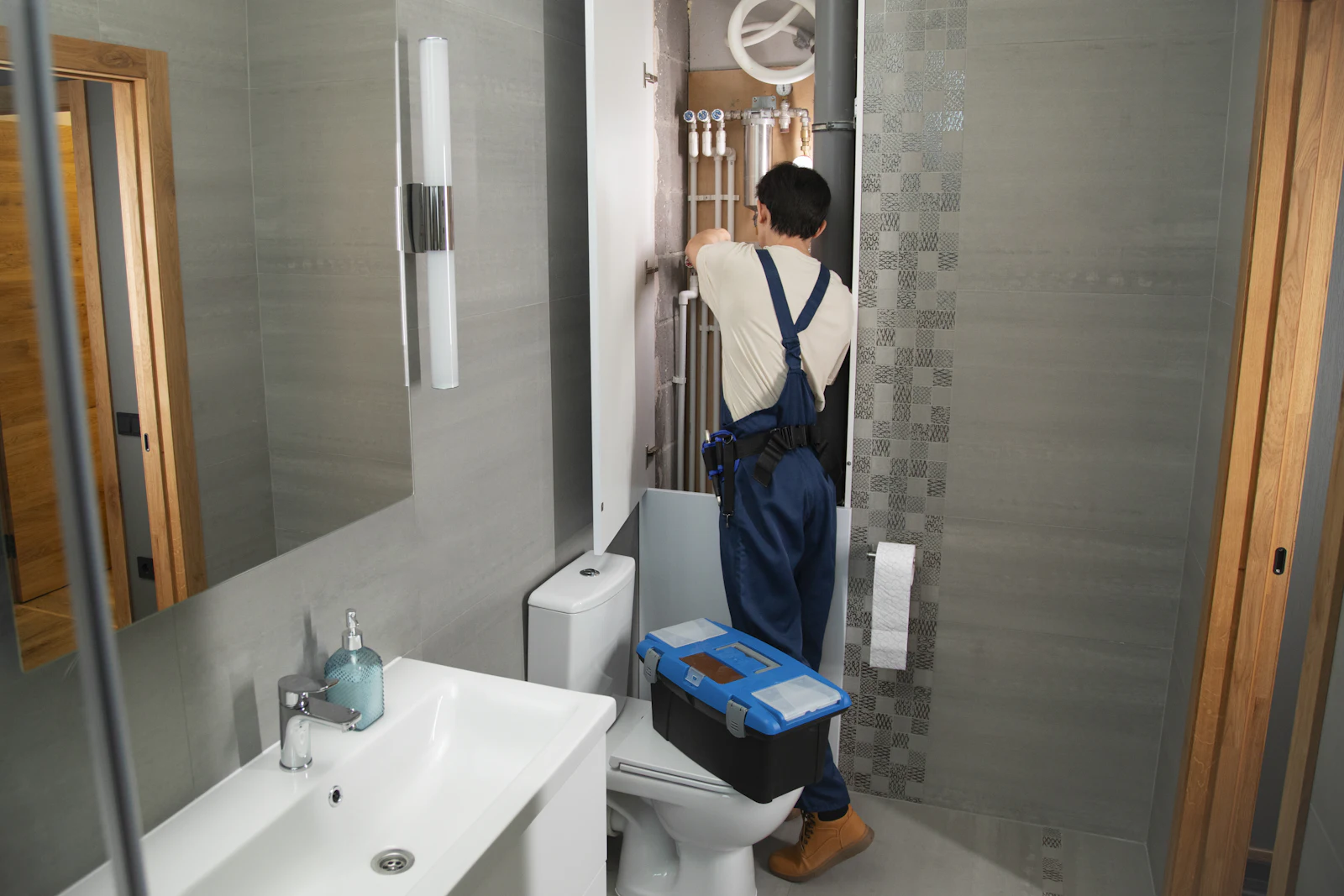
What the plumber typically does
- First fix: running new supply and waste pipes before walls and floors are closed up.
- Second fix: connecting sinks, toilets, showers, baths, appliances and fittings.
- Checking water pressure and flow suit the shower or fittings you've chosen.
- Testing for leaks and making sure waste pipes have the right fall.
Rules and permits
UK: some work must meet Building Regulations (building standards in Scotland), for example new drainage, some electrical work in bathrooms and unvented hot water cylinders. Water fittings must meet water regulations. A WaterSafe approved plumber can certify certain work.
USA: remodels that move or add plumbing usually need a permit and inspection under your local plumbing code. Your licensed plumber or general contractor normally handles this.
Getting comparable quotes
- Share the same drawings or list of fittings with every plumber.
- Ask what's included: removal of old fittings, making good, tiling, electrics, waste disposal.
- Check who supplies the fittings, and who is responsible if a part is faulty.
- Agree a payment schedule tied to stages of work, not a large upfront payment.
Last updated: 14 October 2026


